Trusting Your Nose
Wine is not a puzzle to be solved

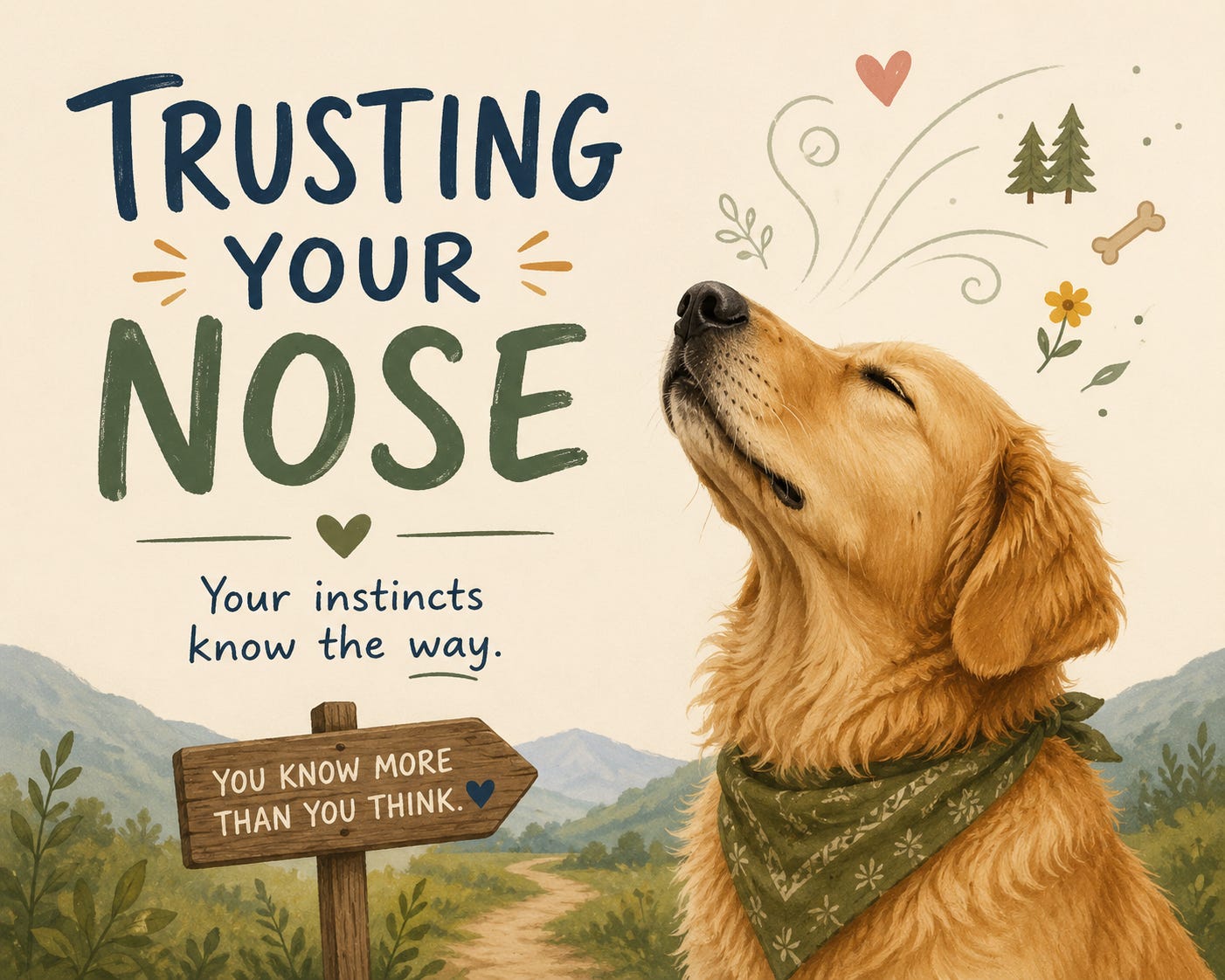
Most days in the tasting room start the same way. Someone approaches the bar with interest but hesitation. They want to try the wine. They want to understand it. They want, in some unspoken way, to “get it.” But there’s concern in their body language, a slight tension in the shoulders, a carefulness in how they hold themselves. They look like someone taking a test they didn’t study for.
Before I pour, I ask a question: “If I blindfolded you and handed you a strawberry, would you know what it was?”
The answer comes immediately. Of course. No hesitation.
“What about an apple?”
Yes.
“Cinnamon?”
Yes.
“Coffee? Lemon peel? Fresh-cut grass?”
Yes, yes, yes. No doubt. No pause. People trust their senses completely when it comes to the world around them. They’ve been smelling things their entire lives. They know what they know.
Then I pour the wine.
I watch them lift the glass, swirl it gently, bring it to their nose. And something changes. The confidence that was there five seconds ago evaporates. They inhale, pause, and then look up with an expression that’s almost apologetic.
“I don’t know what I’m smelling.”
“I’m not very good at this.”
“I never know what I’m supposed to say.”
The irony is striking. Five seconds ago, they were masters of their own senses. They could identify a strawberry blindfolded without a moment’s doubt. Now, presented with fermented grapes in a glass, they look as if they’ve forgotten how to breathe. They believe their nose has failed them.
But it’s not their nose that’s failed. It’s the story we’ve told them about wine.
Somewhere along the way, wine stopped being something you experienced and became something you’re evaluated on. It accumulated rules, hierarchies, vocabulary lists, and implied judgments. People were taught that there are correct answers, and those answers belong to experts. So instead of trusting what they smell, people wait for permission. They search their memory for the “right” descriptor. They worry about sounding unsophisticated or, worse, being wrong.
And in that moment of worry, they stop sensing altogether.
Not because wine is complicated. But because we made people doubt themselves.
Wine is not a puzzle to be solved. It’s a recognition exercise. When you smell wine and think of cherries, you’ve succeeded. When it calls up a memory: an orchard in summer, coffee brewing in the morning, the spice drawer opening… that’s the entire point. The aroma is doing exactly what it’s supposed to do: connecting to something you already know.
But many people have learned to distrust their instincts. They’ve been taught that unless the aroma fits a prescribed list, it doesn’t count. Unless it sounds impressive, it isn’t valid. Unless an expert confirms it, it might be wrong.
In the tasting room, my job becomes less about explaining wine and more about undoing the damage.
I tell guests: “You’re not trying to guess what I smell. You’re noticing what you smell.”
There’s palpaple relief when that penetrates. Shoulders relax and tension leave faces; people stop performing and start paying attention. The conversation moves on from terminology to experience. Instead of “Is this right?” they say, “This reminds me of something.” And suddenly, we’re talking about wine again.
There's a power in giving someone permission to trust themselves. Wine, at its best, is not about expertise. It asks you to slow down, to notice what you're actually smelling, to stay with a sensation long enough for it to connect to something you already know. That's a human skill, not a professional one.
The tragedy is that the wine industry has done the opposite. We’ve rewarded certainty over curiosity. We’ve mistaken confidence for authority. We’ve convinced perfectly capable people that they don’t belong at our table.
But they do.
Wine existed for thousands of years before tasting notes. It was shared long before it was categorized. It was understood through repetition, through memory, through conversation; not through correctness.
When people stop worrying about being right, they start talking to each other, comparing impressions. They laugh when their descriptions don’t match. The table gets louder, warmer, more alive. That’s when wine does its best work: it brings people into the same moment, not as experts and novices, but as people noticing something together.
I don’t need guests to smell what I smell. I need them to trust that what they smell is enough.
Your nose didn’t get worse when the wine arrived. You were just taught not to believe it.
And once you unlearn that, once you give yourself permission to notice without judgment, the whole experience opens again. Not as a performance, but as a shared, human act of attention.
Which is what the table was always meant for.
Perfectly said. I wish there were more venues to experience wine however we experience it, without studying it. Sadly, even tasting rooms are often lecture halls. Estates, vineyard sites, fermentation processes, all make it feel like we should know something about wine before we talk about it.
Great visual :)